When tenure is no longer a proxy for performance
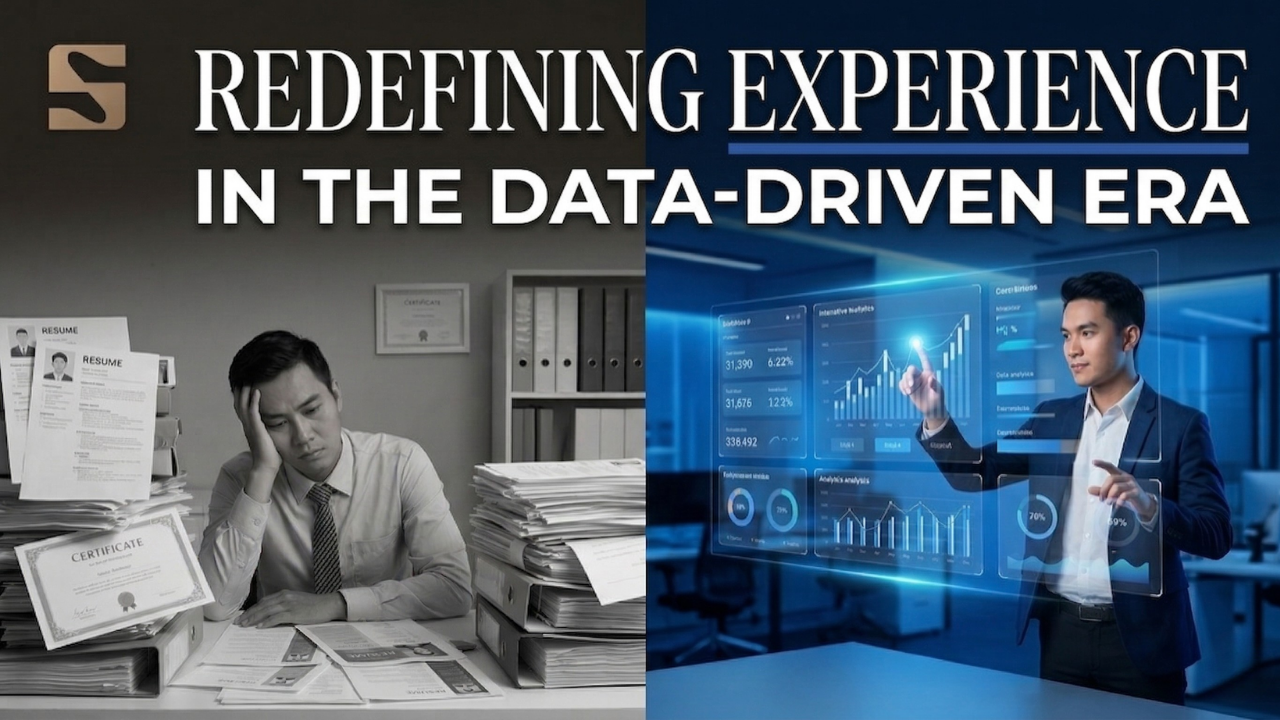
For many years, “experience” has been considered one of the most critical criteria in workforce management. Tenure5 years, 10 years, or more, has often been used as a proxy for capability, reliability, and problem-solving ability.
However, in modern operating environments where data underpins decision-making, this assumption is revealing a systemic limitation: tenure does not accurately reflect performance. As a result, organizations are effectively paying for “experience” without having clear visibility into actual output. This leads to slower strategic decision-making and constrains the organization’s ability to scale efficiently.
An employee with five years of experience does not necessarily equate to five years of growth. In many cases, it may simply represent five years of repeating the same process within a static environment, one that lacks variability, feedback mechanisms, and performance pressure. In such contexts, “experience” ceases to be an asset and instead becomes a poorly defined and easily misinterpreted variable.
The implications extend beyond the individual level. When organizations continue to rely on tenure as a primary metric, misalignment in performance evaluation emerges. Decisions become slower, driven by subjective judgment rather than data. More critically, the operating system itself loses scalability, as capabilities are neither standardized nor transparently benchmarked.
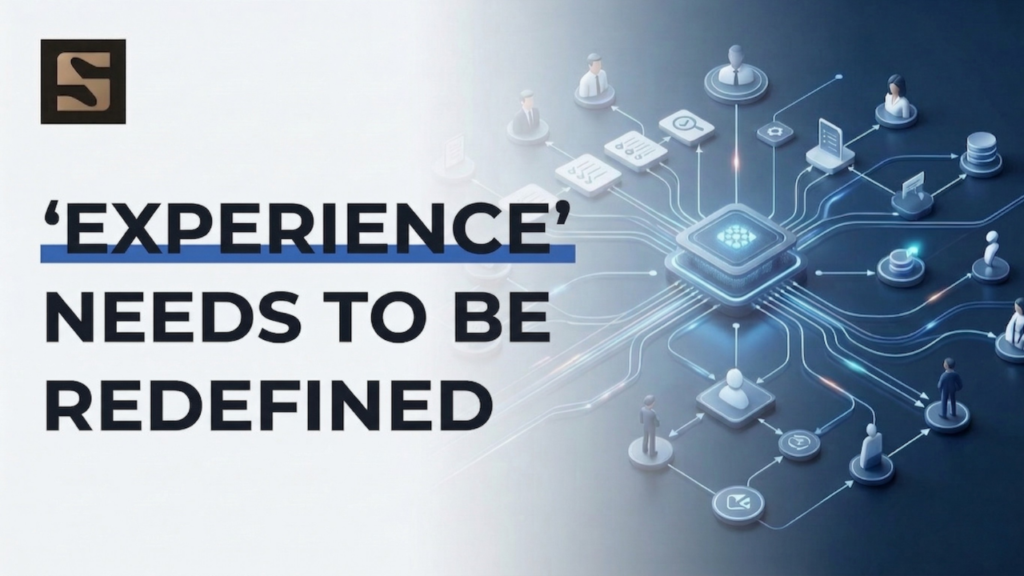
Therefore, “experience” must be redefined, not as a time-based concept, but as a structured construct that can be measured, controlled, and optimized.
What constitutes “experience” in a Data-Driven context?
V5SI defines “experience” not as a function of time, but as a measurable capability structure composed of three core elements:
1. Value-Generating Time
Not total working time, but the amount of time that actually produces value and reflects improvement. This represents intentional accumulation, rather than passive passage of time.
2. Multi-Dimensional Exposure
The breadth and depth of interaction with diverse situations, projects, challenges, operational contexts, and pressures. The greater the exposure, the deeper the capability and the higher the adaptability.
3. Executional Reflex
The speed and quality of decision-making, along with the ability to translate experience into concrete action. This is the factor that directly drives performance outcomes.
These elements only become meaningful under one condition: they must be measured through data. Without data, “experience” remains a qualitative concept, impossible to benchmark, validate, or optimize operationally.
The core challenge: Lack of systems to measure “experience”
Most organizations today lack a sufficiently robust platform to capture and analyze capability-building factors.
Operational data is typically:
- Fragmented across multiple tools
- Disconnected from process flows
- Not reflected in real time
As a result, talent evaluation continues to rely on résumés, subjective impressions, or “past experience,” rather than actual performance within the current system.
To transition from intuition-based to data-driven management, organizations require an operational platform capable of capturing the full workflow lifecycle from how tasks are executed, to decision-making timelines, to the effectiveness of outcomes.
When every action within the system is reflected in data, “experience” is no longer an assumption, it becomes an observable and comparable metric.
CC Workspace: Turning “experience” into measurable data
CC Workspace – a lean operational platform developed by V5SI based on real-world system optimization at CAV Studio, enables organizations to measure and benchmark performance at scale.
Beyond task management, the platform functions as an integrated operational system where all workflows are captured and translated into structured data, including:
- How tasks are executed
- Decision-making timelines
- Output effectiveness
When operational behaviors are fully digitized and interconnected, “experience” evolves from an abstract concept into a measurable, comparable, and optimizable variable. This forms a layer of operational intelligence that organizations previously lacked the ability to systematically observe.
This creates a fundamental shift:
The focus of the system is no longer on managing tasks, but on real-time performance benchmarking across individuals, decisions, and outcomes. Organizations no longer need to “evaluate people” subjectively, they can evaluate performance through actual behavioral data.
This mechanism establishes a disciplined operating environment where:
- Every action leaves a data trace
- Every outcome is traceable
Improvement is no longer driven by managerial oversight, but by system transparency. Employees are not just executing tasks, they are continuously benchmarking and refining their performance within a clearly defined structure.
Conclusion
In the Data-Driven era, “experience” is no longer passively accumulated. It is the result of a continuously measured, controlled, and optimized process within a structured operating system.
For organizations seeking to enhance performance and build a foundation for sustainable growth, the key question is no longer:
“How many years of experience does a candidate have?”
but rather:
“How is that experience being measured and leveraged within the system?”
V5SI partners with organizations to design lean, integrated operating systems, powered by advanced technology and guided by management thinking to unlock maximum performance and sustainable growth.
Discover how CC Workspace enables organizations to standardize team capabilities and make decisions based on real operational data: Link here