Management Perspective: When Individual Errors Reflect Systemic Issues
In business operations, one of the most common questions asked when a mistake occurs is: “Who is responsible?” Typically, an organization’s natural reflex is to track down the individual directly responsible for the error. However, in high-performance management models, this approach only addresses the surface of the problem.
Efficiently run organizations do not stop at identifying “who made the mistake,” but delve into the more critical question: “What system vulnerability allowed that error to occur?”.
Modern Management Philosophy: Individual Errors Often Originate from the System
In management frameworks from McKinsey or BCG, a core principle is often emphasized:
“Performance is a system outcome, not an individual event.”
Performance is not the result of a single individual, but the product of the entire system, including processes, tools, control mechanisms, and organizational operation.
Therefore, the majority of errors in an enterprise are not simply a matter of individual capability, but reflect one or more systemic vulnerabilities:
- Processes are not clear enough or lack standardization.
- Lack of timely control and feedback mechanisms.
- Supporting tools are not suitable for actual operations.
- Lack of data for accurate decision-making.
However, it is important to clarify: the system determines most of the outcome, but people determine how the system is run.
Responsibilities Must Be Clearly Layered
One of the most common management mistakes is prioritizing one side—either completely blaming the individual or attributing everything to the system. In reality, an efficient organization always clearly separates two layers of responsibility:
- Leader is responsible for the system: designing processes, setting standards, building control mechanisms, and ensuring consistency in operations.
- Personnel are responsible for execution: adhering to processes, ensuring work quality, and improving individual performance.
When an error occurs, the correct question is not “who is wrong,” but:
- Was the system clear enough to prevent the error?
- Were the control mechanisms strong enough?
- And did the individual execute correctly according to the system?
Only by addressing both layers simultaneously can an enterprise resolve the issue thoroughly.
The True Role of the Leader: Designing and Upgrading the System
In high-performance organizations, the Leader’s most critical role is not “supervising people,” but:
- Designing systems that enable people to consistently perform correctly.
- Building control mechanisms to detect deviations early.
- Creating a feedback loop for continuous system improvement.
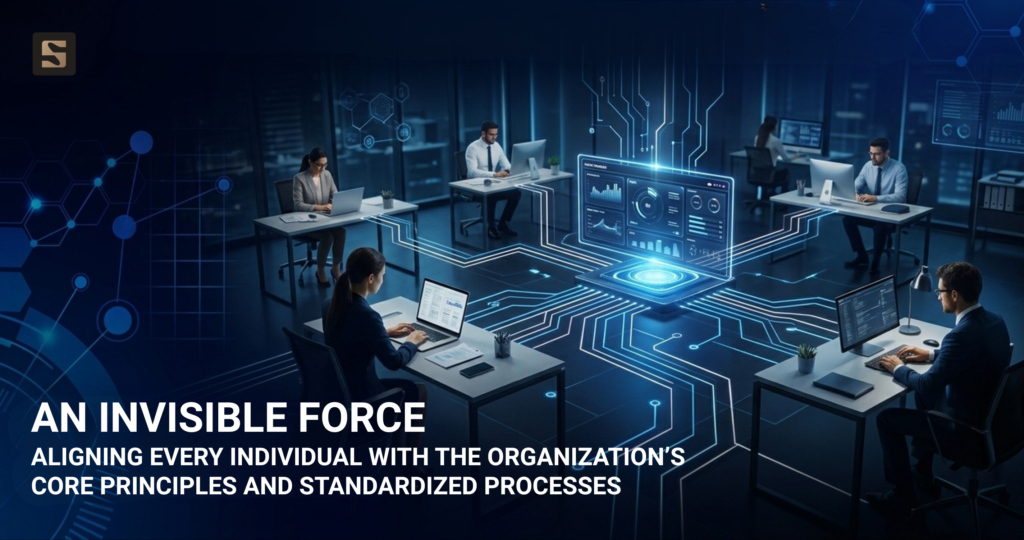
An effective Leader does not just fix errors when they happen, but minimizes the possibility of errors occurring in the first place.
Shifting from Emotional Reactions to System-Based Operations
One of the most crucial transformations in management is the shift from:
Emotional reaction → Data- and system-based operation.
This does not mean eliminating the human element, but reducing reliance on subjective judgment in important decisions. When the system is clear and transparent enough, accountability does not need to be “imposed,” but is naturally formed through the operating mechanism.
Leaders and Managers should not waste energy on emotional reactions or using words to enforce discipline. The ultimate responsibility always lies with the system and its designer. If the system is tight and run with discipline, the likelihood of individual errors will be minimized.
CC Solution has developed the CC Workspace platform – a lean operational management platform for creative enterprises, a unified operating system for managing personnel, progress, and performance, developed based on a performance management mindset. It is not merely a project management tool, but an “invisible thread binding” all individuals to the core principles and standardized processes of the enterprise.
CC Workspace supports Leaders in creating a Culture of Operational Discipline through:
- Absolute Performance Transparency: The system establishes a mechanism to manage performance, efficiency, and results based on every hour and minute of work. This is the basis for evaluating personnel based on tangible benefits to the enterprise, eliminating ambiguity regarding capability.
- Controlled Accountability Promotion: CC Workspace creates a mechanism for “real-time performance benchmarking” (Passive Comparison), where employees self-assess their effectiveness against colleagues/the collective. This generates positive pressure and continuous self-improvement motivation, while inadvertently “forcing” personnel to comply with their own set commitments.
In the journey toward sustainable growth, V5SI believes that team discipline must be built from a clear systemic structure, not from individual supervision or subjective feeling. By applying CC Workspace solutions, enterprises can transform the issue of handling individual errors into an opportunity to upgrade the management system, thereby building a transparent, sustainable, and highly effective work culture.
V5SI partners with enterprises to forge a lean operational system, integrating innovative technology guided by a Management Mindset to achieve maximum efficiency and sustainable growth.
Follow V5SI
- Website: https://v5si.com
- Facebook: https://facebook.com/v5sigroup
- LinkedIn: https://linkedin.com/company/v5sigroup
- Email: info@v5si.com